Low water pressure in a Hurricane home usually shows up in small ways first. The shower never quite rinses the shampoo out, the washer takes longer to fill, and the kitchen faucet sputters when someone flushes a toilet. The first question is whether the problem sits at one fixture or runs through the whole house. The causes are very different.
One Fixture or the Whole House?
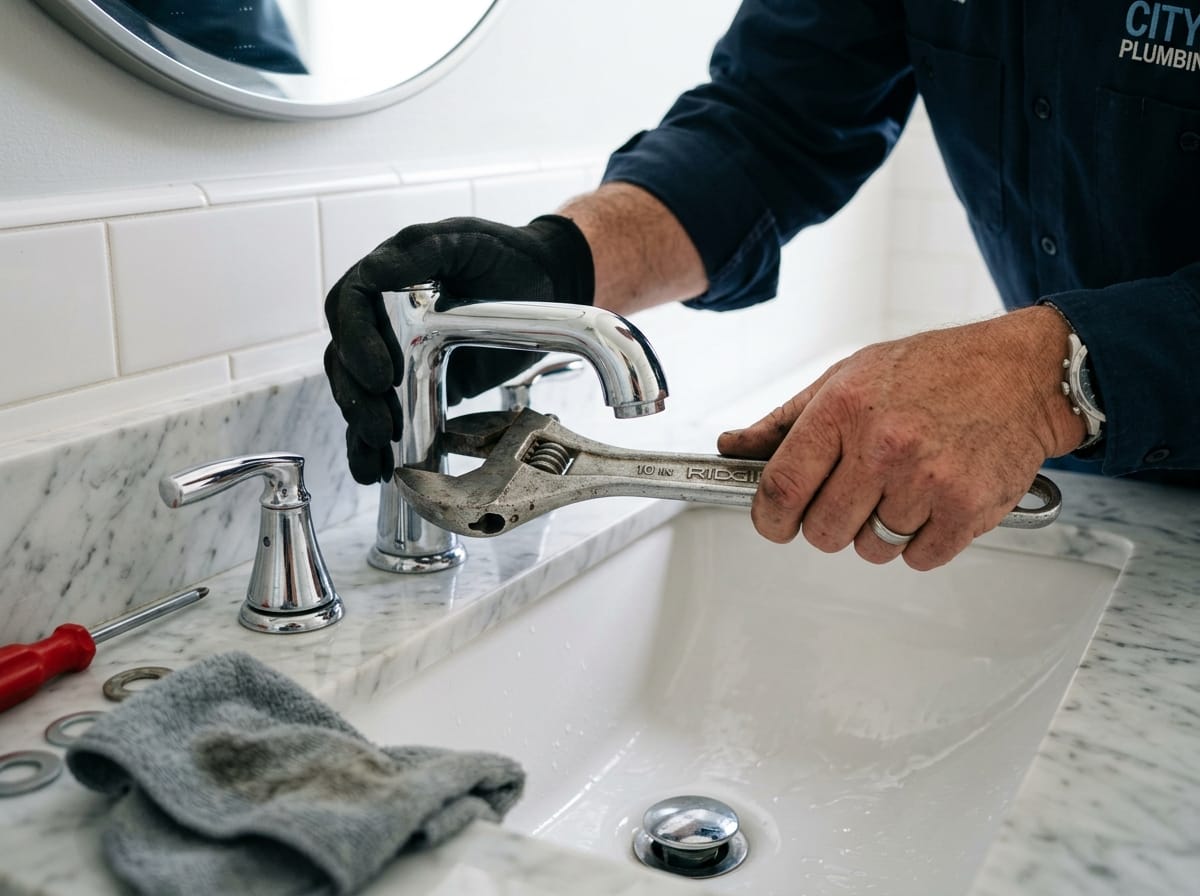
Start by testing several fixtures, both hot and cold. If only one faucet or showerhead is weak, the cause is usually at that fixture. Southern Utah water is hard, and its minerals collect in the small screens and passages inside fixtures.
- Clogged aerator: The screen at the tip of a faucet catches sediment and scale. EPA's WaterSense program describes aerators as faucet accessories, and most unscrew from the spout for a quick look.
- Scaled cartridge: Inside a single-handle faucet or shower valve, a cartridge controls flow, and mineral buildup there can choke just that fixture.
- Hot side only: If only the hot water is weak across the house, look toward the water heater, its shutoff valve or the hot supply line.
When every fixture is weak at once, the cause is upstream. For single-fixture problems, faucet and fixture repair is usually the right fix.
Why Whole-House Low Water Pressure Happens
Water arrives from the utility's main under pressure, passes through the meter, travels along a buried service line and enters the house. Anything along that path that narrows the opening, leaks water away or lowers the supply pressure will weaken every fixture downstream.
- Main shutoff not fully open: A main valve left partly closed after earlier work restricts flow to the whole house. A stop-and-waste valve, where a home has one, can be left partly closed too.
- Failing pressure-reducing valve: A pressure-reducing valve, or PRV, often sits where the main line enters. A spring and diaphragm inside set the outgoing pressure. When the diaphragm wears or the inlet screen clogs with debris, the valve can drop pressure too far.
- Leak on the service line: A break in the buried line between the meter and the house sends water into the soil instead of to your fixtures.
- Scale narrowing older pipe: In older galvanized steel pipe, corrosion and mineral scale build up on the inside wall and shrink the opening.
How Hard Water Narrows Older Pipes
The USGS explains that hard water is high in dissolved calcium and magnesium, and that heating it can form solid calcium carbonate deposits. That scale also builds inside pipes and fixtures.
Older galvanized steel pipe is the most vulnerable. Once the zinc coating wears through, the steel rusts, and rust and scale together roughen and narrow the inside wall. The result is a house where one fixture runs fine alone but everything sags when two or three run together. Copper and PEX lines are far less prone to this kind of internal corrosion.
Scaled pipe inside walls or under a slab cannot practically be cleaned in place. The long-term answer is repiping the affected lines, which a plumber can scope after confirming the diagnosis.
A Hurricane Scenario You Might Recognize
Picture a couple in Hurricane living in an older single-story home. On a summer morning, one person showers while the other starts the dishwasher, and the shower fades to a weak stream. Later, with nothing else running, the kitchen faucet seems fine.
That pattern matters. Low water pressure that appears only when two fixtures run at once points to restriction: scale in older galvanized lines, a partly closed valve, or a PRV that can no longer keep up.
If the pressure were weak with a single fixture running, and the meter's leak indicator kept moving with everything off, the pattern would point to a service line leak instead. Either way, the couple's next step is the same: run the simple checks below.
Safe Checks You Can Do Yourself
- Confirm the main valve is fully open: The main shutoff is often in the garage near the water heater or on an outside wall where the line enters. A lever handle is open when it runs parallel to the pipe. A round gate valve handle opens counterclockwise, so turn it gently and stop if it resists.
- Do a meter leak test: Turn off every faucet, appliance and irrigation timer. Note the meter reading and watch its leak indicator dial, if it has one. If the dial moves or the reading changes while nothing runs, water is leaving the system somewhere.
- Check the PRV: Look for drips around the valve body and note its age. A screw-on pressure gauge at an outdoor hose bib gives a reading you can share with a plumber.
- Ask the water utility: Ask whether there is maintenance, a main break or a known pressure issue in your area.
If the meter test points to a leak you cannot see, professional leak detection can pinpoint it before anyone digs. Red Rock Plumbing works with homeowners in Hurricane and across Southern Utah on whole-house pressure problems like these.
Summer Demand and Irrigation
Hurricane summers are hot and dry, and landscape watering rises with the heat. EPA's WaterSense program notes that residential outdoor water use goes mainly to landscape irrigation, and that the average household uses more water outdoors than for showering and washing clothes combined. EPA also points out that outdoor use can run much higher in drier parts of the country.
Your own sprinkler system can pull pressure from the house if it runs while someone showers. And on some summer mornings and evenings, when many homes water at the same time, supply pressure can dip across the system. If low water pressure only appears during watering hours, check your irrigation timer first, then ask the utility whether peak demand is a factor.
Safety Notes
- Do not force old valves: An old gate valve can snap its stem or start leaking at the packing when forced. Stop and call a plumber rather than putting a wrench on a stuck handle.
- Leave the utility side alone: The valve on the street side of the meter usually belongs to the water utility, so do not operate it or try to repair anything on that side.
- Do not adjust a PRV blindly: Turning the adjusting screw without a gauge can push pressure higher than your fixtures and water heater are built to handle.
- Lift meter box lids with a tool: Meter boxes can hide insects, spiders and standing water, so lift the lid with a tool and look before reaching in.
When to Call a Professional
Some pressure problems need testing equipment or access to hidden pipe. Call a plumber when any of these apply.
- Low water pressure affects every fixture, and the main valve is fully open.
- The meter test shows water moving with everything turned off.
- You find a soggy patch of yard, a warm spot on a slab floor or the sound of running water with fixtures off.
- The PRV is leaking, or your gauge readings swing widely through the day.
- Pressure keeps getting worse over months, especially in a home with galvanized pipe.
A plumber can measure static and flow pressure, inspect or replace the PRV, and trace where the restriction or leak sits before recommending repairs.
Frequently Asked Questions
Why is my water pressure low only in the shower?
A single weak fixture usually has a clogged showerhead, aerator or cartridge. Hard water speeds that buildup, so cleaning or replacing the part often restores flow.
Can a pressure-reducing valve fail without leaking?
Yes. The diaphragm or spring can wear out, or the screen can clog, while the outside of the valve stays dry. Pressure that drifts or drops may be the only sign.
Does low water pressure mean I have a leak?
Not always. A partly closed valve, a failing PRV or scaled pipe can cause it too. The meter test helps separate a leak from a restriction.
Should I ask my neighbors?
Yes. If neighbors notice the same drop, the cause may be on the supply side, so contact the water utility before scheduling work inside the house.
Next Steps With Red Rock Plumbing
Before you call about low water pressure, note which fixtures are weak, whether hot, cold or both are affected, and when the problem started. Record the meter leak test result, whether the main valve is fully open, and any gauge reading you took, along with the time of day. Mention whether the home has galvanized pipe, a PRV or recent plumbing work, and whether the drop is worse during watering hours.
Those details help a plumber head straight to the likely cause, whether that is a valve, a failing PRV, a hidden leak or aging pipe. When you are ready, contact Red Rock Plumbing to schedule a low water pressure diagnosis for your Hurricane home.