
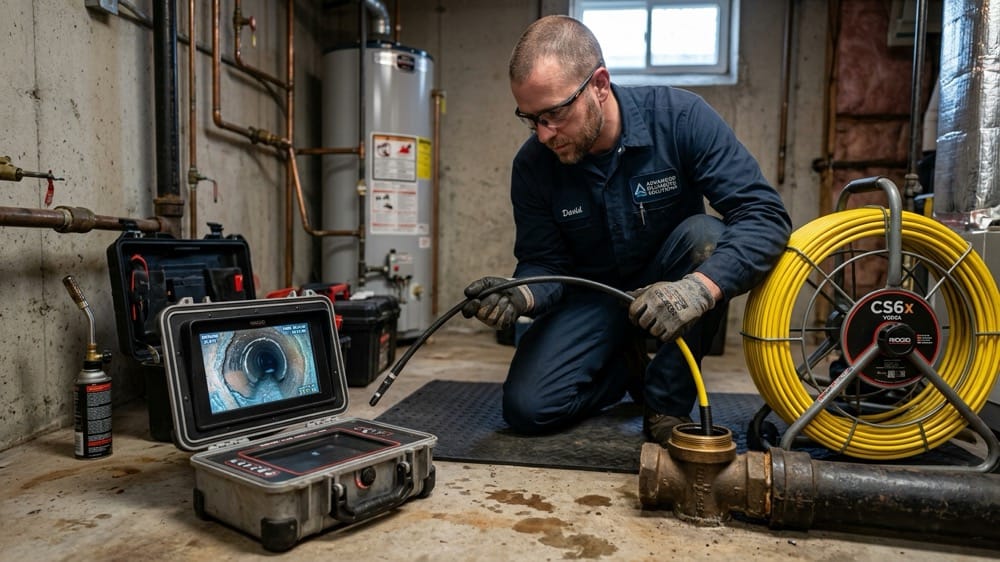
A sewer ejector pump alarm is loud on purpose. In a Lehi home with a basement bathroom or laundry, that beeping means wastewater in the pump basin has risen higher than it should. The pump is not moving it out fast enough. The alarm is an early warning, and there is usually time to act before water backs up through the lowest drain.
Below is how the system works, what sets off an ejector pump alarm, and what you can safely check yourself.
How a Basement Ejector System Works
Many Utah County homes have basements, and a basement bathroom or laundry often sits below the level of the main sewer line. Gravity cannot carry that wastewater uphill, so it drains into a sealed basin set into the basement floor, where a sewage ejector pump waits.
As wastewater flows in, a float switch rises with the level. When the float reaches its turn-on point, the pump starts and pushes the water up through a discharge pipe to the gravity sewer line. A check valve on that pipe keeps the water from falling back into the basin after the pump shuts off.
The basin lid is sealed with a gasket, and a vent pipe carries sewer gas out through the roof. A second float, positioned above the pump's turn-on level, controls the alarm. When the water keeps rising past the point where the pump should have cleared it, that alarm float lifts and the panel sounds.
Why the High-Water Alarm Goes Off
An ejector pump alarm tells you one thing: the water is higher than the pump's normal operating range. Most causes fall into these groups.
- Stuck float: A float can hang up on the pump body or its own cord, and a float stuck low never tells the pump to start. A home inspectors' association's sump pump inspection guidance names a jammed float as one of the most common reasons sump pumps fail, and ejector floats face the same risk.
- Tripped breaker or GFCI: A pump without power cannot run. On many systems the alarm has its own circuit or a battery, so it keeps sounding while the pump sits idle.
- Failed pump: Motors wear out, and impellers can seize or jam. A pump that hums without moving water may be at the end of its service life.
- Clogged discharge or check valve: When the discharge pipe is blocked or the check valve sticks closed, the pump runs but the water has nowhere to go. A shutoff valve left partly closed after earlier work causes the same problem.
- Wipes and grease: Wipes wrap around impellers and snag floats, while grease coats floats and basin walls before hardening into clogs.
A Lehi Scenario You Might Recognize
Picture a family in Lehi with a finished basement bathroom and laundry. On a Saturday morning, minutes after the washer finishes its drain cycle, a sharp beeping starts from a small box near the utility room and a red light comes on. The basement toilet flushes slowly, and the shower drain is sluggish.
Someone stands near the basin and listens. There is no hum from the pump at all. That silence narrows things down, because a silent pump points toward lost power, a stuck float or a failed motor.
If the pump were running steadily while the ejector pump alarm kept sounding, the pattern would point to a clogged discharge line, a stuck check valve or a jammed impeller instead. Either way, the family's next move is the same: stop using the basement fixtures and start the safe checks below.
What to Do When the Alarm Sounds
- Silence the alarm: Many panels have a silence or test switch. Silencing the alarm fixes nothing, so treat the quiet as a reminder rather than a solution.
- Stop using basement fixtures: Skip flushing, showering, laundry and sink use downstairs, and keep water use low everywhere until you know which fixtures feed the basin.
- Check the breaker and GFCI: Only if the floor around the panel and outlet is dry, look for a tripped breaker or a GFCI outlet that has popped. Reset it once. If it trips again, leave it off, because repeated tripping points to a fault in the pump or its wiring.
- Listen without opening: Stand near the basin and note whether the motor hums, runs, clicks or stays silent.
If power returns and the pump runs until the alarm stops, the level is dropping, but have the system inspected soon anyway. Red Rock Plumbing handles sewer ejector pump repair and replacement for homes in Lehi and across Utah County when the cause is more than a simple reset.
Safety Notes
- Keep the basin sealed: Do not remove a sealed basin lid. OSHA explains that hydrogen sulfide occurs naturally in sewers, is heavier than air and can collect in low, enclosed spaces.
- Keep your hands out: Never reach into the basin, where the pump, float and wiring all sit in wastewater.
- Avoid wet electrical areas: Do not touch the panel, outlet or pump cord if water is on the floor around them. This GFCI overview explains why basement outlets carry ground-fault protection.
- Smoke or burning: If you smell burning or see smoke from the pump outlet or alarm panel, get everyone outside, then call 911 from outside.
- Unclear odors: If you cannot tell whether a smell is sewage or natural gas, get everyone outside and call the gas utility's emergency line from outside.
When to Call a Professional
Some alarm causes are quick resets. Others need someone who can open the basin safely, test the pump and pull it if needed. Call a plumber when any of these apply.
- The breaker or GFCI trips again after one reset.
- The pump hums, but the water level does not drop.
- The pump runs nonstop or cycles on and off every few minutes.
- The ejector pump alarm returns within a day of going quiet.
- Water has come up through a basement drain, shower or toilet.
A plumber can inspect the float setup, the check valve and the discharge line, and confirm whether the pump itself is failing. If the problem is a blockage in the discharge line or the building drain beyond it, professional drain cleaning may be part of the repair.
Habits That Keep the Alarm Quiet
An ejector pump is designed for toilet waste and ordinary drain water, not for anything else. The EPA urges people to flush only toilet paper, noting that disinfecting wipes and other non-flushable items can damage internal plumbing. In an ejector basin, that damage often looks like a wipe wrapped around the impeller or a float held down by debris.
- Keep wipes, paper towels and hygiene products in the trash, even when a package says flushable.
- Keep cooking grease out of basement sinks.
- Space out laundry loads when the basement washer drains to the basin.
It also helps to understand how this system differs from a sump pump, which moves groundwater away from the foundation. An ejector pump moves wastewater from plumbing fixtures, so the two look alike but are not interchangeable.
Frequently Asked Questions
Can I use the upstairs bathrooms while the alarm is on?
In most homes, upstairs fixtures drain by gravity and never reach the basin. Some homes send more fixtures to the ejector, so keep water use light until you know your layout.
Is it safe to silence the alarm and wait?
Silencing the ejector pump alarm is fine, but waiting is risky. The basin keeps filling every time a basement fixture drains, and a full basin can only back up.
Why does my ejector pump alarm go off after laundry?
A washer drains a large volume of water quickly. If the pump is weak, the float is sticky or the discharge line is partly blocked, that surge can outpace the pump.
Is an ejector pump the same as a sump pump?
No. An ejector pump lifts wastewater from fixtures up to the sewer line, while a sump pump moves groundwater away from the foundation.
Next Steps With Red Rock Plumbing
Before you call, gather a few details. Note when the ejector pump alarm started, what drained just before it, and whether the pump hums, runs or stays silent. Write down whether a breaker or GFCI tripped and whether it held after one reset. Mention any slow drains, gurgling or odors in the basement, and keep past service records handy if you have them, including the date the pump was last replaced.
Those notes help a plumber narrow down the cause before opening the basin. When you are ready, contact Red Rock Plumbing to schedule an ejector pump inspection at your Lehi home, and keep the basement fixtures off until the pump has been checked.