
The call to a plumber in St. George, UT usually starts the same way: "something is leaking, can someone come out?" That gets the conversation going, but it leaves the person on the other end guessing about almost everything that matters for preparing the visit.
A few minutes of notes before you dial changes that. This guide covers what to write down and why each item helps. It does not tell you what your problem is, and nothing here is a diagnosis. Reporting observations and identifying causes are two different jobs, and only one of them is yours.
Timing: when it started and how it has behaved
Timing is the single most useful thing a homeowner can report, and it is the one most often left out. Start with two questions: when did you first notice it, and has it changed since?
- The date or approximate day you first noticed something.
- Whether it is constant or comes and goes.
- If it comes and goes, what it seems to follow: time of day, use of a particular fixture, running an appliance, nothing obvious.
- Whether it has gotten more noticeable, less noticeable, or stayed the same.
- Whether it stopped on its own at any point.
"Since Tuesday, worse in the mornings, only when the washing machine runs" is a genuinely useful sentence. "For a while now" is not. You do not need to be precise to be helpful. An approximate date with a note about the pattern beats a vague duration every time.
Fixtures and rooms: what is affected and what is not
Scope matters as much as symptom. Whether one fixture is involved or several changes what a plumber expects to look at, and the negative information is as valuable as the positive.
- Which fixture or appliance is involved: a specific sink, tub, shower, toilet, water heater, filtration equipment, outdoor spigot.
- Which room it is in, and which floor.
- Whether other fixtures in the same room behave normally.
- Whether fixtures elsewhere in the home behave normally.
- Whether both hot and cold are involved, or only one.
Check other fixtures before you call if it is safe to do so. Running a tap in another bathroom takes thirty seconds and tells the plumber whether the situation is local to one spot or showing up across the home. Do not go into any area where water is near electrical equipment, and do not open anything up to check.
Visible water: where it shows and how far it spreads
Describe what you can see from where you are safely standing. Volume, location, and whether it is active.
- Where water is visible: under a cabinet, on a floor, on a ceiling, on a wall, around a base, outside.
- Whether it is actively moving, or a wet area that is not obviously growing.
- Whether there is staining, discoloration, or a mark that looks older than the water.
- Whether anything is pooling, and roughly how far it has spread.
- Whether you have shut off water anywhere, and which shutoff you used.
A photo taken from a safe distance is worth sending if the company accepts photos. Ask when you call. The place water appears is not necessarily the place it comes from, so describe the appearance and let the inspection establish the source.
Sounds: what you hear and where
Sounds get dismissed as too vague to report, which is a mistake. They are observations like any other, and they are yours to describe in plain language.
- Running or trickling water when nothing is turned on.
- A knocking, banging, or thumping when a tap or appliance shuts off.
- A hissing, whistling, or high sound near a fixture or appliance.
- Gurgling from a drain or a nearby fixture.
- Any new sound from a water heater or filtration unit.
Note where you hear it and when. "A knocking in the wall behind the laundry, only right after the washer stops filling" is a clean observation. You do not need to know what causes it, and you should not try to work that out. Describe it and stop there.
Odors: describe rather than interpret
Smell is worth reporting and easy to over-interpret. Describe the smell in ordinary words, say where and when you notice it, and leave the meaning alone.
- Where you notice it: a specific drain, a room, hot water only, cold water only, near equipment.
- When you notice it: always, after water sits unused, at particular times.
- Whether it is new or has been there a while.
- Whether anyone else in the home notices the same thing.
If you ever smell gas or suspect a gas issue, that is not a plumbing observation to note and report later. Leave the area and contact your gas utility and emergency services from a safe location.
Recent work: the history that gets forgotten
Anything done to the home in recent months is context, even when it seems unrelated. This is the category homeowners most often forget to mention and most often turns out to matter.
- Plumbing work of any kind, including small repairs.
- Appliance installation or replacement: washer, dishwasher, refrigerator with a water line, water heater, filtration equipment.
- Remodeling, flooring, or anything that involved opening a wall or floor.
- Landscaping or irrigation work near the home.
- Any period when the home sat unoccupied with water off or unused.
Include the approximate timing and who did the work if you know. If you still have paperwork from a previous visit, have it nearby when you call.
Put it on one page
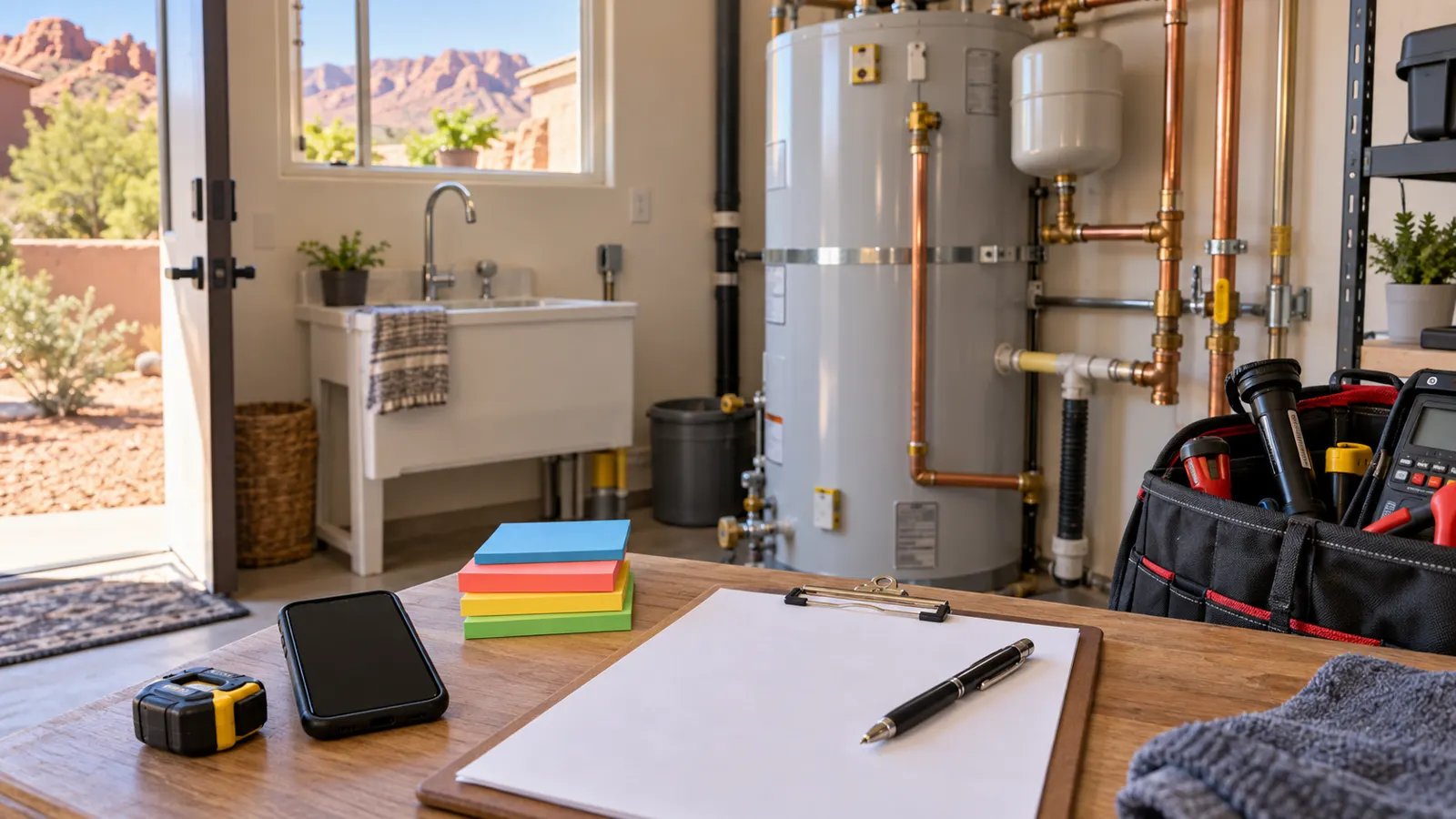
Write the six categories down in order before you call: timing, fixtures affected, visible water, sounds, odors, recent work. A short line under each is enough. Keep the page next to you during the call, and keep it for the visit itself, because the person who arrives may ask the same questions and a written answer stays consistent.
Resist the urge to add a conclusion at the bottom. A note that reads "I think it is the water heater" tends to steer the conversation toward that answer before anyone has looked. Report what you noticed and let the evaluation happen on site.
What happens with your notes
Good notes let a plumbing company prepare a visit rather than improvise one. They inform what gets asked on the phone, what access is likely needed, and what questions come first on arrival. They also give you a record of the situation before anything was touched, which is useful if the same thing comes up again later.
Red Rock Plumbing serves St. George, UT, with listed services covering emergency plumbing, water heaters, and water filtration. You can see what Red Rock Plumbing covers in St. George, or contact Red Rock Plumbing with your notes in hand to request service.
\n