
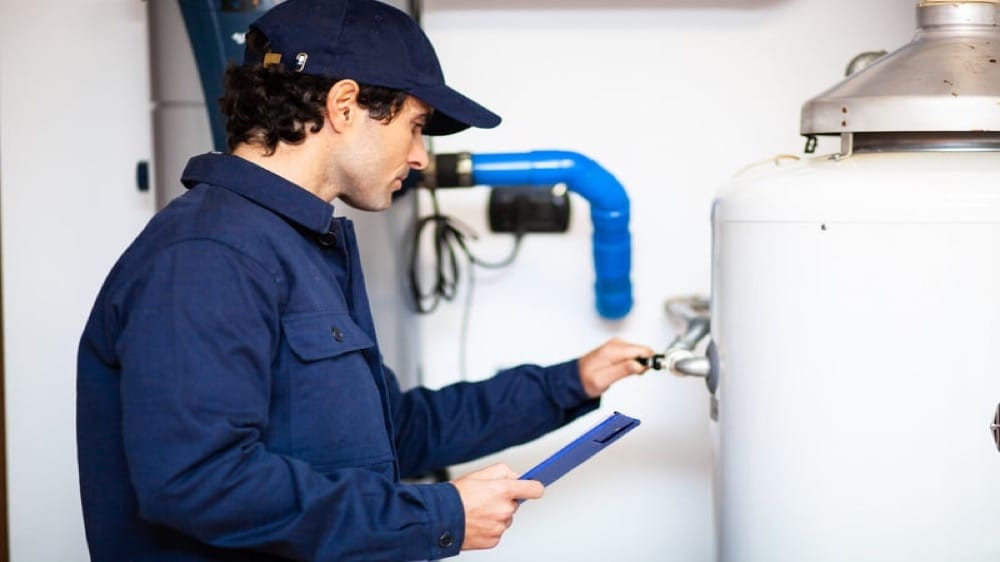
A water heater expansion tank is a small tank, installed on the cold water line near the heater, that gives heated water somewhere to go. Most homeowners in Washington, Utah never think about it until something goes wrong. This guide explains how the tank works, why its air charge matters, the signs it has failed, and what replacement involves.
Why Thermal Expansion Needs Somewhere to Go
Water expands as it heats. Every time a tank-type water heater runs a heating cycle, the water inside takes up more space than it did when it entered cold. In an open system, that extra volume simply pushes back through the service line toward the water main.
Many homes are no longer open systems. A check valve, backflow prevention device or pressure-reducing valve near the meter lets water in but stops it from flowing back out. EPA WaterSense guidance on service water pressure points out that installing a pressure-reducing valve creates a closed system, which can make thermal expansion something local codes address. With nowhere to go, expanding water raises pressure throughout the plumbing each time the heater fires.
The residential code Utah has adopted caps static water pressure at 80 psi and requires a means for controlling increased pressure caused by thermal expansion where these devices close the system. A water heater expansion tank is a common way to control that thermal expansion.
How the Air Bladder Works and Why the Charge Must Match
Inside a water heater expansion tank, a flexible diaphragm or bladder divides the tank into two chambers. One side holds air charged to a set pressure at the factory. The other side connects to the cold water line and fills with water. When heated water expands, it pushes into the water side and compresses the air cushion. When someone opens a faucet and pressure drops, the air pushes that water back into the system.
This only works when the air charge is set correctly. One manufacturer's guide states that expansion tanks must be sized to the water heater's capacity and pressurized to match the home's incoming water pressure.
If the air charge is lower than house pressure, water fills much of the tank at rest, leaving little room for expansion. If the charge is much higher, water cannot enter until pressure climbs past it, so the tank does little. Because the factory charge may not match your home, it should be checked and adjusted before the tank is filled.
Signs a Water Heater Expansion Tank Has Failed
The bladder inside can rupture, the air charge can slowly leak away, or the steel shell can rust through. Watch for these signs:
- A dripping relief valve after heating: The temperature and pressure relief valve discharge pipe drips after the heater runs a cycle. The same manufacturer's guide notes that thermal expansion may cause drips from that discharge pipe.
- A tank that sounds solid: A working tank sounds hollow over its air side and duller where water sits. A waterlogged tank sounds dull and solid from end to end.
- Pressure swings: Water surges from a faucet when it is first opened, or a pressure gauge creeps upward overnight while no water is being used.
- Water at the air valve: When a plumber tests the air valve and water comes out instead of air, the bladder has failed.
- Rust or moisture: Corrosion, drips or damp spots appear on the tank shell or its fitting.
The ICC's water heater safety CodeNotes states that any discharge from the relief valve indicates a distribution system problem, a water heater problem or a malfunctioning relief valve. A failed expansion tank is one possible cause, not the only one.
A Washington Scenario You Might Recognize
Picture a family in a Washington home with the water heater in the garage. Over a few weeks, they notice a small puddle forming at the end of the relief valve discharge pipe, mostly after evening showers when the heater has just finished reheating. In the morning, the kitchen faucet spurts hard for a moment when it is first opened.
When they tap the expansion tank on the cold line, it sounds dull and solid from end to end. Taken together, the pattern points to a waterlogged water heater expansion tank that can no longer absorb thermal expansion, so pressure spikes during each heating cycle and the relief valve releases some of it. A pressure-reducing valve set too high could cause similar symptoms, so the whole system deserves a look, not just the tank.
What You Can Safely Check Yourself
These observations help a plumber narrow down the cause without opening the system.
- Watch the discharge pipe: Note when drips appear and whether they follow a heating cycle, such as after showers or laundry.
- Do the tap test: Knock gently along the expansion tank and listen for a change in sound between the air side and the water side.
- Check house pressure: The EPA tech sheet describes attaching a pressure gauge to a hose bibb to verify pressure. One manufacturer's guide suggests a gauge with a recording hand to watch pressure over a full day.
- Look for moisture: Check the tank, its fitting and the floor or pan below the heater for water or rust.
Replacing a Water Heater Expansion Tank
When a water heater expansion tank has failed, replacement is usually straightforward work for a plumber. The water supply is shut off, pressure is relieved, and the old tank comes out. The new tank's air charge is set to match the home's static water pressure before it is filled, and the tank is sized to the heater.
This is also a good time to check the pressure-reducing valve and the relief valve, since all three parts work together. If the heater is near the end of its service life, pairing the tank with a new water heater keeps the system matched. Homes with a tankless water heater store far less hot water, so whether an expansion tank is needed depends on the equipment and the local code.
Red Rock Plumbing handles water heater work in Washington and nearby Southern Utah communities, and the Washington service area page lists the plumbing services available there.
Safety Notes
Stored heat and pressure call for care around the heater.
- Do not cap or plug the relief valve discharge pipe: The ICC CodeNotes explains that the discharge pipe must not have a threaded end, so no one can cap it and create a dangerous condition.
- Treat discharge water as hot: Water and steam from the relief valve pipe can scald, so keep hands and faces away from the outlet.
- Do not remove a tank under pressure: Shut off the water and relieve pressure first, or leave the job to a plumber.
- If you smell gas near a gas water heater: Get everyone outside, then call 911 or the gas utility's emergency line from outside.
- Keep water away from electrical parts: On an electric heater, leave access panels closed if water is present.
When to Call a Professional
Call a plumber if the relief valve drips or discharges repeatedly, if the expansion tank sounds waterlogged, or if a gauge shows house pressure above the code limit. Adjusting a pressure-reducing valve, setting an air charge and replacing a tank all involve working on a pressurized system. A discharging relief valve is a warning sign, not a nuisance to silence.
Water on the floor around the heater, damp drywall nearby, or a water meter that keeps moving while every fixture is off also deserves attention, because high pressure stresses joints throughout the house. If you suspect a hidden leak, leak detection can help locate it.
Frequently Asked Questions
Does every home need a water heater expansion tank?
Not every home. The code calls for thermal expansion control where a check valve, backflow device or pressure-reducing valve closes the system. A plumber can tell whether your setup requires one.
Can a waterlogged expansion tank be recharged?
Sometimes. If only the air charge has leaked down and the bladder is intact, the tank may be recharged to match house pressure. If water comes out of the air valve, the bladder has failed and the tank needs replacement.
Is a dripping relief valve dangerous?
It is a warning that pressure or temperature is outside the normal range, or that the valve itself is failing. Do not cap it. Have the heater, the expansion tank and the house pressure checked.
Your Next Step With Red Rock Plumbing
Before you reach out, note when the relief valve drips, what the tap test sounds like, and any pressure readings you took. Also note whether the home has a pressure-reducing valve near the meter.
Then contact Red Rock Plumbing to schedule a visit. Share those notes so the plumber can check the expansion tank, the pressure-reducing valve and the relief valve together.