Tankless water heater scale is a frequent reason an on-demand heater in Santa Clara, Utah starts acting up. The shower swings between hot and lukewarm, the flow at the tub drops, and a code appears on the display.
Hard water leaves mineral deposits inside the heater, and a tankless design feels the effect sooner than a tank does. This guide covers why scale forms, the symptoms to watch for, how descaling works and when a flush is no longer enough.
Why Tankless Water Heater Scale Builds Up Faster
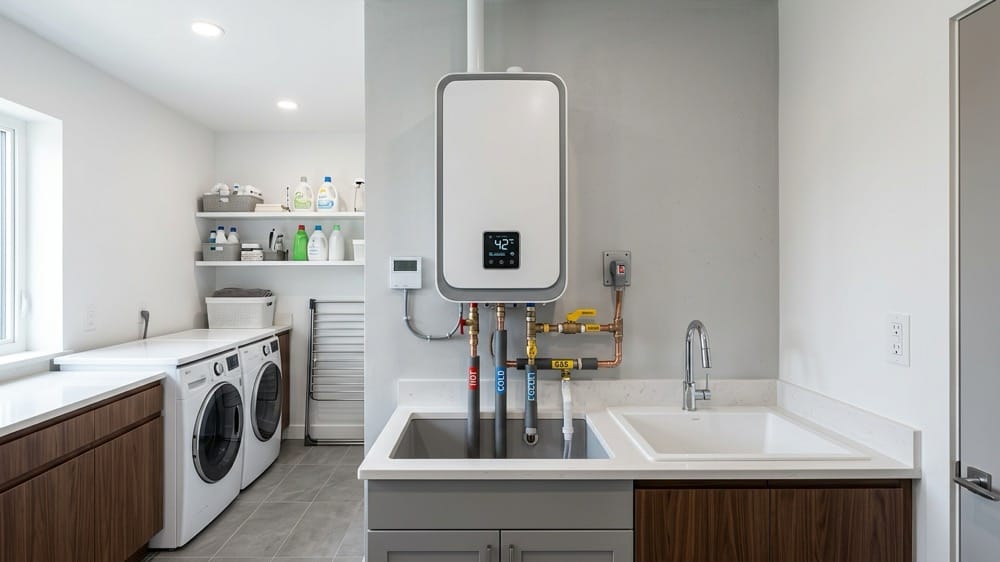
A gas tankless heater has no storage tank. As ENERGY STAR explains, opening a hot tap draws cold water in, a flow sensor fires the burner, and the water picks up heat as it passes around the heat exchanger. Every drop of hot water in the house moves through that one compact exchanger.
Hard water carries dissolved calcium and magnesium. The USGS notes that when hard water is heated, solid calcium carbonate deposits can form.
In a tank, some of that mineral settles to the bottom as sediment. In a tankless unit, it bakes onto the hot walls of narrow waterways instead. The scale layer insulates the metal, so the burner has to work harder to reach the set temperature, and the hotter metal collects scale even faster. That cycle is why tankless water heater scale can go from minor to disruptive faster than many owners expect.
Signs of Tankless Water Heater Scale
Scale rarely announces itself with a single symptom. More often, several small changes show up together:
- Fluctuating temperature: The water drifts hot, then lukewarm, then hot again during one shower. Scale disrupts heat transfer, and the controls keep overcorrecting.
- Error codes: Many units display a code when they sense overheating, restricted flow or a scale warning. The owner's manual explains what each code means.
- Reduced flow: Deposits narrow the waterways, so hot water leaves the taps more slowly than cold water does.
- Noise: Popping, crackling or hissing inside the unit during heating can come from water flashing to steam against scaled metal.
- Shutdowns: The heater may shut off mid-use to protect itself, then run normally after the tap is turned off and on.
One manufacturer's water quality page goes further and calls hard water scale a leading cause of failure for tankless water heaters.
A Santa Clara Scenario You Might Recognize
Picture a family in Santa Clara whose gas tankless heater hangs on the garage wall. Over a few months they notice the morning shower drifting from hot to lukewarm and back. The tub now takes longer to fill, and one evening the display flashes a code and the water turns cold until someone shuts the tap and opens it again.
Their first thought is that the heater is too small. The pattern says otherwise.
If temperature swings happened only while the dishwasher and a shower ran together, the unit might simply be reaching its flow limit. These swings show up with a single shower running, the flow at every hot tap has dropped, and the symptoms have worsened over months. That combination points toward tankless water heater scale on the heat exchanger, possibly along with a clogged inlet filter screen.
What You Can Safely Check Yourself
A few checks help sort scale from other problems without opening the heater:
- Write down the code: Record any error code and look it up in the owner's manual.
- Compare fixtures: If only one faucet is slow, check its aerator for mineral buildup before blaming the heater.
- Look for isolation valves: Below most properly installed units sit a hot and a cold valve, each with a small service port. Note whether yours has them.
- Check the softener: If the home has a water softener, confirm it has salt and is regenerating on schedule.
- Clean the inlet screen: Only if the manual lists it as an owner task, follow its steps to rinse the inlet water filter screen.
Keep the unit's cover on. The burner, gas valve and electronics inside are technician territory.
How Descaling Works
Descaling circulates a mild acid solution through the heat exchanger to dissolve mineral deposits. With the gas and power shut off as the manual directs, the isolation valves close the heater off from the house plumbing. Hoses connect a small pump to the service ports, and the pump circulates white vinegar or a descaling solution the manufacturer approves through the heater. The run time comes from the manual, not from guesswork.
After circulation, the heater is flushed with clean water, the inlet screen is cleaned, and the valves are reopened slowly to purge air before power returns.
How often to do it depends on the model and the water. One manufacturer's maintenance guide notes that tankless units do not need a tank flush, that many require descaling, and that owners should follow the manufacturer's handbook for timing. A heater installed without isolation valves needs them added before routine descaling is practical.
Softening the Water Upstream
Descaling removes scale after it forms. Softening keeps much of it from forming in the first place. A water softener uses ion exchange, trading the calcium and magnesium in the water for sodium as it passes through a resin bed. Penn State Extension's water softening guide explains the process and notes that hardness scale can build up on water heaters and shorten their useful life.
Hard water is common across Southern Utah, so softening is worth considering for any home with a tankless unit. A softener installed ahead of the heater means less mineral reaches the heat exchanger, which slows new tankless water heater scale and stretches the time between flushes.
Softening does not replace the maintenance schedule in the manual. If your home has a tankless heater and no treatment, water softener installation is the upstream half of the fix, and descaling is the downstream half.
Safety Notes
- Hot water: Water inside the heater and its lines can be hot enough to scald. Let the unit cool as the manual directs before touching fittings.
- Power and gas: Shut off electrical power and the gas supply as the manual instructs before any flush or screen cleaning.
- Descaling products: Handle any descaler exactly as its label directs, and use only products your heater's manual allows.
- Sealed parts: Do not remove the front cover or adjust the burner or gas valve.
- Electrical: Keep hoses, buckets and spilled solution away from the power cord and outlet during any flush.
- Gas smell: If you smell gas, get everyone outside, then call 911 or the gas utility's emergency line from outside.
When a Flush No Longer Helps
Descaling works well on scale caught in time. It has limits, and these signs mean it is time to call a professional:
- Error codes return soon after a thorough descaling.
- Hot water flow stays low even after the flush and a clean inlet screen.
- Water drips from the case, or corrosion appears around the fittings.
- Long overheating has damaged the heat exchanger or its sensors.
- The unit has no isolation valves, or it sits where it is hard to reach safely.
At that stage the question becomes repair or replacement, and a technician can test the exchanger, the flow sensor and the controls to answer it. Red Rock Plumbing services tankless water heaters throughout Southern Utah, including homes in Santa Clara and nearby St. George.
Frequently Asked Questions
How often should a tankless water heater be descaled?
Follow the interval in your owner's manual. Harder water and heavier hot water use generally call for more frequent descaling, and a softener can lengthen the gap.
Can I use vinegar to descale my tankless heater?
Many manuals allow white vinegar, while others call for a specific descaling solution. Use what your manual lists for your model.
Will a water softener prevent tankless water heater scale?
A softener removes the hardness minerals that form scale, so it slows buildup considerably. Keep up the descaling schedule anyway.
Should I switch back to a tank water heater?
Tank heaters collect sediment in hard water too. If you are weighing options, the water heater services page covers both tank and tankless systems.
Schedule Tankless Service With Red Rock Plumbing
Before you reach out, gather a few details. Write down any error codes, when the temperature swings happen, and whether one fixture or several are affected. Those notes make the first visit more focused.
Note the date of the last descaling if you know it, whether the home has a water softener, and whether the unit has isolation valves. A photo of the rating label on the heater helps identify the model and its maintenance needs.
Then contact Red Rock Plumbing to schedule tankless water heater service for your Santa Clara home. A technician can confirm whether tankless water heater scale is behind the problem and whether descaling, softening or a repair fits your system.